In Fig. 1 shows a circuit diagram of a wireless microphone that can be used in the composition of small-sized radio stations.

Figure. 1
Радиомикрофон работает в СВ диапазоне частот 27,0…27,4 МГц с использованием частотной модуляции. Выходная мощность передатчика составляет несколько десятков милливатт.
The schema-based forms of IMS КР531ГГ1. In this IC includes two controllable generator. The frequency of each generator is controlled by the voltage. The output IC (pin 10 DD1) is formed by a sequence of pulses with a frequency determined by the formula: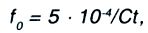
where Ct is the capacitance customizados capacitor (C7), pF.
In IC DD1 has the ability to control the frequency of the output pulses of the voltage applied to the terminal 1 or 2. To obtain the necessary frequency deviation of the output signal is a microphone amplifier DA1 К118УН1А. The modulating low frequency signal through the buffer amplifier transistor VT1 is supplied to the frequency control input of the IC DD1. With the release of the DD1 frequency modulated sequence of pulses fed to the input of the resonance amplifier on the VT2 transistor КТ610.
The resonant circuit L2, C9 is configured on the operating frequency of the microphone. It also further attenuates the higher harmonics of the signal (as amplified signal has a meander shape).
Configuring wireless microphone comes to the selection of the capacitance of the capacitor C7* to obtain the necessary oscillation frequency (27 MHz). Capacitor C9 is used to set up output circuit is in resonance. Microphone BM1 —any electret.
The L2 coil has 16 turns of wire sew-2 with a diameter of 1 mm, wound on a mandrel of 10 mm diameter, winding length is 30 mm. the withdrawal of the make from 6 (relatively VT2 is connected to the coil end) coil. As the telescopic antenna is used, a length of about 50 cm.
Author: N. Zhdanov
